
Generator Load Bank Testing: When It Is Needed, How It Is Done and What It Proves
A load bank test connects an artificial electrical load to a generator so it can run at a known share of its rating, independent of the building. NFPA 110 requires an annual test at 50% of nameplate kW for 30 minutes and 75% for 60 minutes for diesel units whose monthly tests do not reach 30% load. It proves capacity, exercises the cooling and fuel systems and burns off wet stacking deposits.
In this article
- What is a generator load bank test?
- Why load bank test a generator?
- When does NFPA 110 require a load bank test?
- How is a load bank test done?
- What readings should be recorded?
- Resistive or reactive load bank?
- How often should a generator be load bank tested?
- How monitoring data decides which generators need it
- Frequently asked questions
- Sources
Most standby generators never see their rated load. The site they protect draws a fraction of what the generator can deliver, so the monthly test runs the engine lightly, and nobody knows whether it could actually carry the full load when it matters.
A load bank test answers that question in a controlled way, on a planned day, with a technician standing next to the engine instead of during an outage.
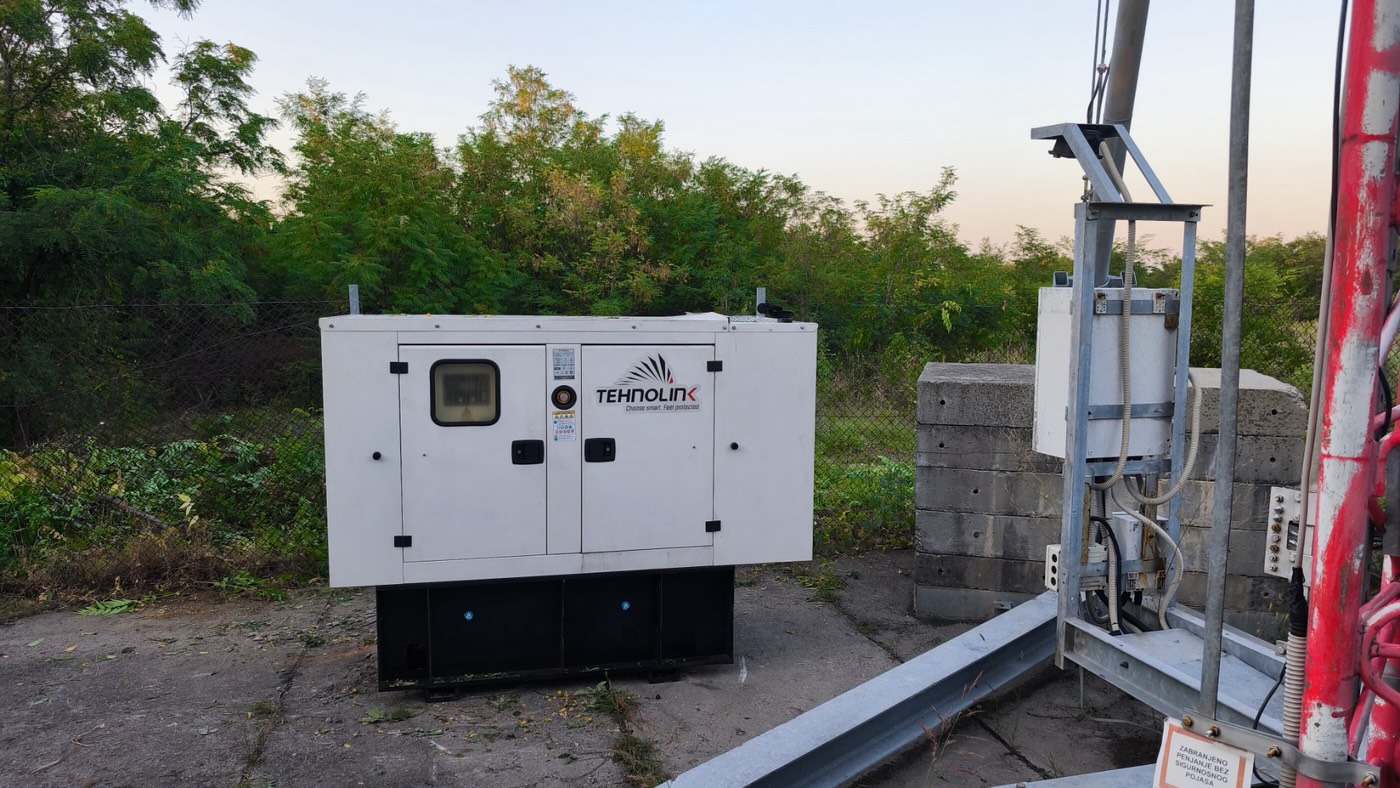
What is a generator load bank test?
A load bank is a portable or permanently installed device that turns electrical power into heat. Connected to the generator output, it lets the technician apply a precise load, in steps, regardless of what the building is using at that moment.
During the test the generator runs at a defined percentage of its nameplate kW for a defined time, while the technician records electrical and engine readings. The result is a documented proof of what the generator can do, rather than an assumption.
Why load bank test a generator?
- Prove capacity. The only way to know a generator can deliver its rated output is to make it deliver that output.
- Clear wet stacking. Diesel engines that run lightly loaded build up unburned fuel and carbon in the exhaust. Running at high load for a sustained period raises exhaust temperature enough to burn off early and developing deposits.
- Exercise the whole system. Cooling, fuel delivery, the governor and the voltage regulator only show their weaknesses under real load. A radiator that copes at 20% may overheat at 80%.
- Meet the standard. NFPA 110 requires an annual load bank test for diesel generators whose monthly tests do not reach the required load, and many contracts and insurers ask for one regardless.
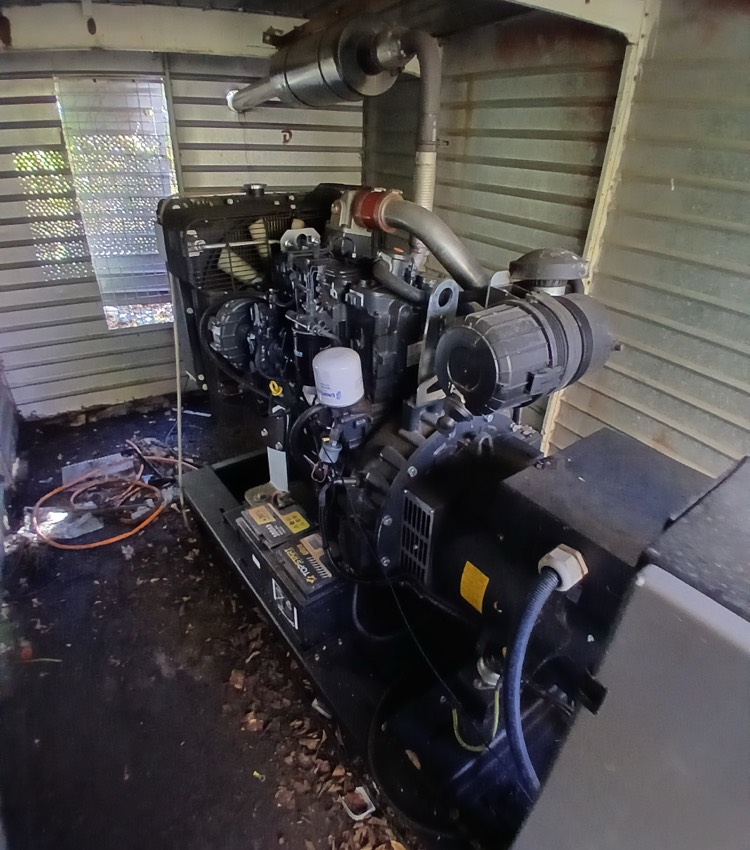
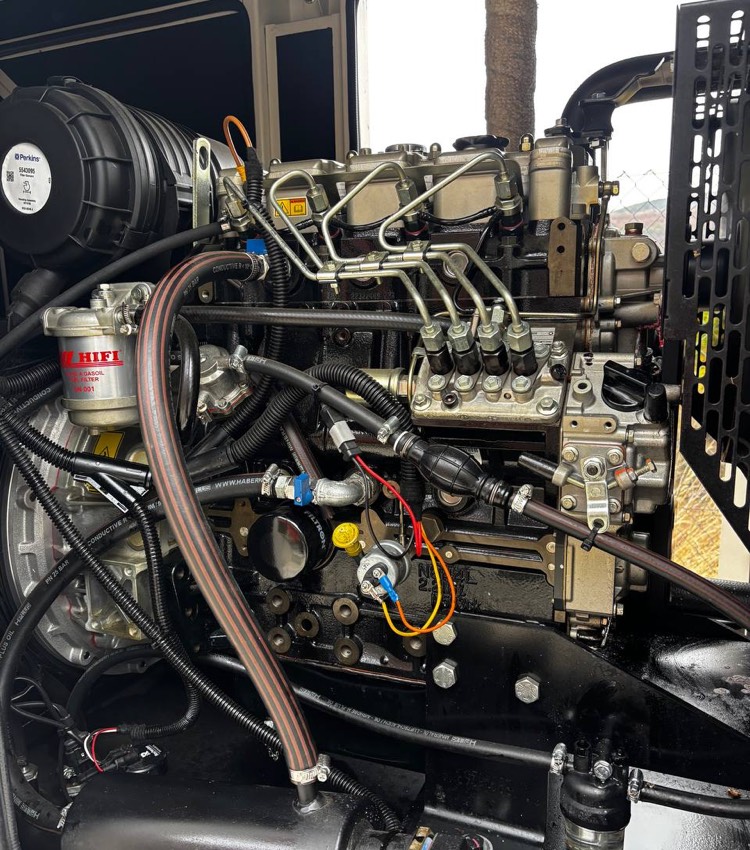
When does NFPA 110 require a load bank test?
NFPA 110 sets the monthly test for emergency power systems: at least 30 minutes under load, either at not less than 30% of the generator's nameplate kW, or at a load that keeps the exhaust gas temperature at the minimum the manufacturer recommends.
Diesel generators that cannot meet that requirement with the building load must be exercised monthly with the available load and, once a year, with a supplemental load, in practice a load bank:
- at least 50% of nameplate kW for 30 minutes,
- followed by at least 75% for 60 minutes,
- for a total of 1.5 hours of continuous running.
Level 1 systems also have a test at least once every 36 months, for the duration of the system's assigned class, up to four hours. Where the building load is too low for that test, a load bank is used there too. New installations get an acceptance test with load before they are put into service.
The standard is adopted differently in different places, and local codes, health care accreditation and contracts can add their own rules, so always check which edition and which additions apply to the site.
How is a load bank test done?
- Plan the test. Confirm the generator rating, the load bank size, the connection point, cable sizes and the test profile. Agree the window with the site, because the generator may be unavailable for backup during part of the test.
- Check before starting. Oil, coolant, fuel level, battery, belts and the controller's alarm log. There must be enough fuel for the whole test.
- Connect safely. Isolate the circuit, connect the load bank cables to a suitable connection point or the generator output terminals, check phase rotation and tightness, and position the load bank so its hot exhaust air goes somewhere safe.
- Start and warm up. Run the engine without load or at low load until it reaches operating temperature.
- Apply load in steps. Raise the load in stages, for example 25%, 50%, 75% and, where the test calls for it, 100%. Hold each step long enough for temperatures to settle.
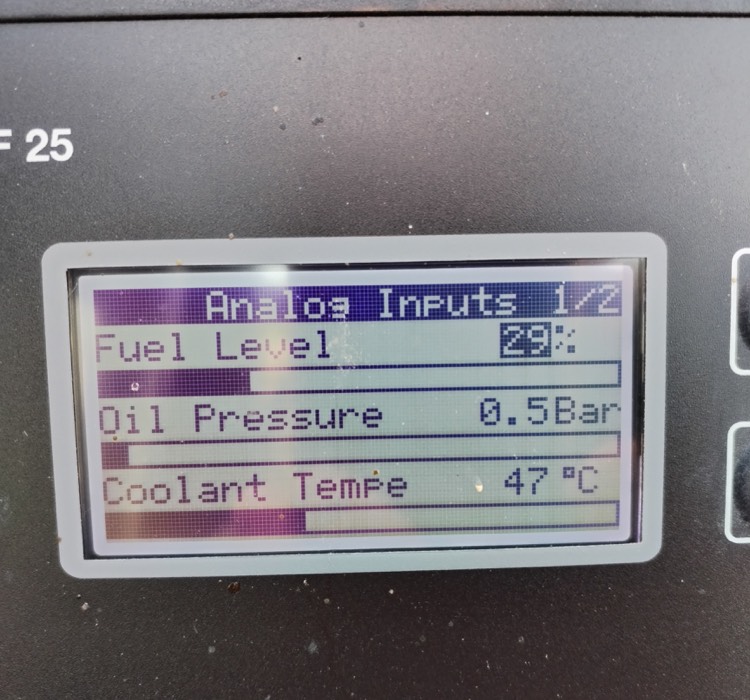
- Record readings at every step. Electrical and engine values, at regular intervals, not only at the end.
- Unload and cool down. Remove the load in steps and let the engine run unloaded for its cool-down period before stopping.
- Restore and report. Disconnect the load bank, return the generator and controller to automatic mode, confirm there are no active alarms, and write the report with all readings and any findings.
What readings should be recorded?
| Reading | Why it matters |
|---|---|
| kW, kVA and power factor | Confirms the actual load against the test profile |
| Voltage on each phase | Voltage regulation and balance under load |
| Current on each phase | Load balance and connection quality |
| Frequency | Governor stability as load steps on and off |
| Coolant temperature | Cooling system capacity |
| Oil pressure | Engine lubrication under load |
| Exhaust temperature | Whether the load is high enough to clear deposits |
| Fuel consumption or level | Fuel system delivery and planning data |
| Battery and charger voltage | Starting system condition after the run |
| Alarms and warnings | Anything the controller flagged during the test |
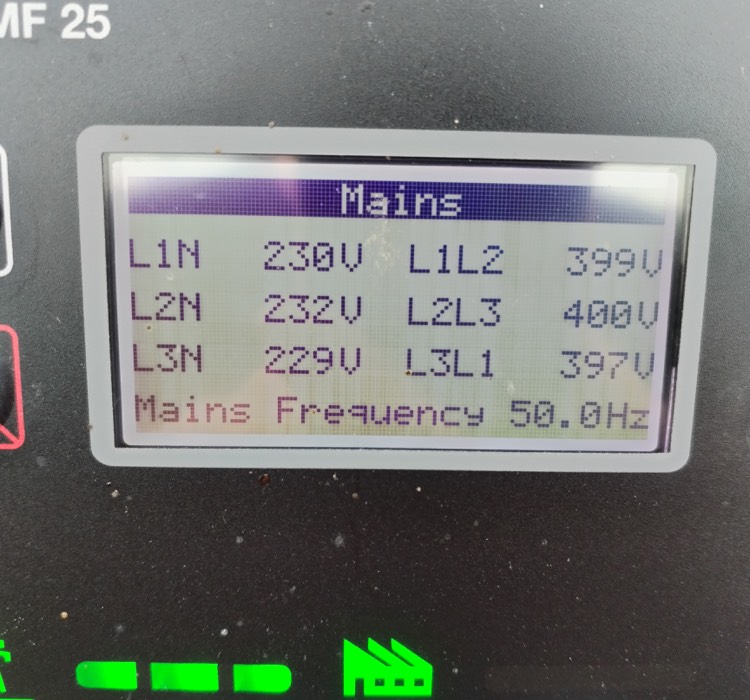
Most of these values come straight from the generator controller, so a controller connected to a monitoring platform can log them automatically through the whole test instead of a technician writing them down every 15 minutes.
Resistive or reactive load bank?
| Type | What it simulates | Typical use |
|---|---|---|
| Resistive | A purely resistive load at power factor 1.0, the engine side of the test | Annual NFPA 110 load bank tests, wet stacking burn-off, most routine testing |
| Reactive (resistive plus inductive) | A real-world load at a lagging power factor, typically around 0.8 | Commissioning, testing the alternator and voltage regulator at their full kVA rating, paralleled systems |
A resistive load bank loads the engine fully but does not stress the alternator at its full kVA rating, because the power factor is 1.0. When the alternator, the voltage regulator or paralleling controls are part of what needs proving, a reactive load bank gives the more realistic test.
How often should a generator be load bank tested?
- Every year, where the monthly tests do not reach 30% of nameplate kW or the manufacturer's exhaust temperature. This is the NFPA 110 requirement for diesel emergency generators.
- At least every 36 months, for Level 1 systems, as part of the extended test, if the building load is not enough.
- After major repairs to the engine, cooling system or alternator, before the generator goes back to standby duty.
- Where data shows it is needed: any unit whose logged load stays low run after run.
How monitoring data decides which generators need it
Across a fleet, the question is not whether load bank testing is useful, but which units need it this year. The controller already records the load during every test run. Collected on a monitoring platform, that data gives a simple list:
- Units whose monthly tests reached 30% or the exhaust temperature target: no annual load bank test required.
- Units that stayed below it: schedule a load bank test, ideally before winter.
- Units with rising coolant temperature or falling oil pressure under load: investigate first, test after the repair.
That turns load bank testing from a blanket annual cost into a planned job for the units that actually need it.
Frequently asked questions
What is a load bank test on a generator?
A load bank test connects an artificial electrical load to a generator so it runs at a known percentage of its rated output for a set time, while the technician records electrical and engine readings. It proves the generator can carry its load and exercises the cooling and fuel systems.
How long does a generator load bank test take?
The NFPA 110 annual test is 1.5 hours of continuous running: 30 minutes at 50% of nameplate kW and 60 minutes at 75%. With connection, warm-up, cool-down and disconnection, a typical visit takes half a day. Commissioning and Level 1 extended tests take longer.
How often should a generator be load bank tested?
NFPA 110 requires an annual load bank test for diesel emergency generators whose monthly tests do not reach 30% of nameplate kW or the manufacturer's exhaust temperature. Level 1 systems also need a test at least every 36 months. Many operators test lightly loaded units every year even where it is not required.
What is the difference between a resistive and a reactive load bank?
A resistive load bank applies load at power factor 1.0 and fully loads the engine. A reactive load bank adds inductive load, typically for a power factor around 0.8, so the alternator and voltage regulator are tested at their full kVA rating, as in a real building.
Can a load bank test fix wet stacking?
A load bank test at high load usually clears early and developing wet stacking by raising exhaust temperatures and burning off the deposits. It cannot reverse advanced damage such as glazed cylinder liners, which needs mechanical repair.
Sources
- NFPA 110, Standard for Emergency and Standby Power Systems (current edition 2025), chapter 8, including the monthly test, the annual supplemental load test and the 36-month test for Level 1 systems.
- Generator and load bank manufacturers' operation and testing documentation.
- Domar field procedures for generator testing and annual service.
- Related reading: wet stacking, generator maintenance schedule and checklist and NFPA 110 generator testing requirements.

See every generator's status and service plan in one place
GenSetCare reads alarms, fuel and run hours from the controller, schedules service by run hours and calendar, and gives technicians a field app with live checklists.